
2026-09-29
How AI Can Help Manufacturers Find Cost Savings Hidden in Engineering Drawings
Discover how AI-powered engineering drawing analysis can uncover hidden cost-saving opportunities and help manufacturers make smarter procurement and engineering decisions.
Manufacturers often already have valuable cost-related information sitting inside their engineering drawing archives. Engineering drawing AI is what makes that information usable, reading tolerances, materials, and geometry at scale and turning them into data that can actually support a procurement or engineering decision, rather than sitting in a PDF nobody has time to open.
This article looks at how engineering drawing AI analyzes a drawing, where cost-saving opportunities can typically emerge once that data is structured, and how that analysis supports procurement and manufacturing decisions in practice.
The Cost Savings Manufacturers Can't See
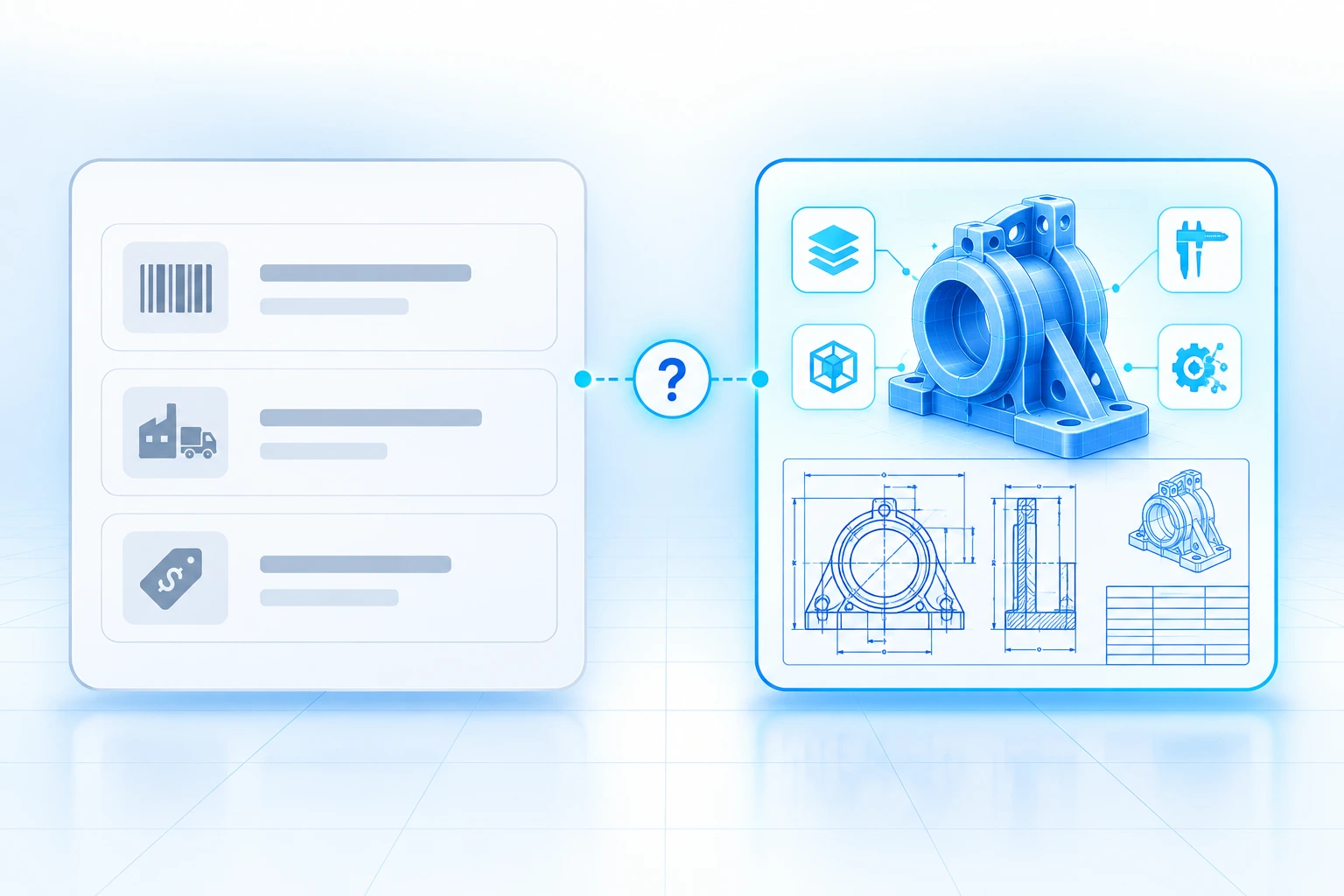
Procurement teams generally have good visibility into what they're paying. What's harder to see is whether that price actually reflects what the part is, because that answer depends on details that live in the drawing, not the purchase order: material, tolerance, geometry, manufacturing complexity.
An ERP or spend analytics system can tell you a part number, a supplier, and a price. It typically can't tell you whether that price is reasonable for what the part actually is, because it was never built to read the engineering drawing behind the part number. That gap, between what's purchased and what was engineered, is where cost-saving opportunities can exist without anyone noticing.
What's Actually Hidden Inside an Engineering Drawing
A single engineering drawing typically carries far more usable information than a procurement or ERP record ever captures:
- Material type and grade
- Dimensional tolerances and GD&T callouts
- Surface finish and coating requirements
- Part geometry and complexity
- Manufacturing process implied by the design
- Revision history
Individually, none of this is secret information, an engineer looking at one drawing can read all of it in a few minutes. The challenge is scale. Manually reading, interpreting, and cross-referencing this level of detail across tens of thousands of drawings isn't practical for most teams. That's the specific problem engineering drawing AI is designed to address.
How Engineering Drawing AI Analyzes a Drawing
Reading the Drawing, Not Just the Part Number
Engineering drawing analysis starts with the drawing itself, not the metadata around it. Rather than treating a drawing as an image to file and search by name, AI models trained for this task identify the actual elements on the page, dimension lines, tolerance symbols, material callouts, title block fields, and interpret how they relate to each other. A tolerance symbol gets tied to the specific feature it modifies. A material note gets linked to the part it describes.
This distinction matters. Reading text on a drawing is different from understanding what that text means in an engineering context, and it's the second part that turns a scanned PDF into usable data.
Turning Extracted Data into Structured Analysis
Once information is extracted consistently across an archive, it can be organized by what each part actually is, material, tolerance band, size, complexity, manufacturing process, rather than by part number or filename. That structure is what makes comparison possible at scale. Two parts that look unrelated by number can potentially be recognized as functionally similar once they're compared by what they're actually made of and how they're actually made.

Where Hidden Cost Opportunities Typically Exist
Once a drawing archive is structured this way, a few patterns can emerge, worth checking for even if they don't apply to every organization.
Price Mismatches Across Suppliers and Sites
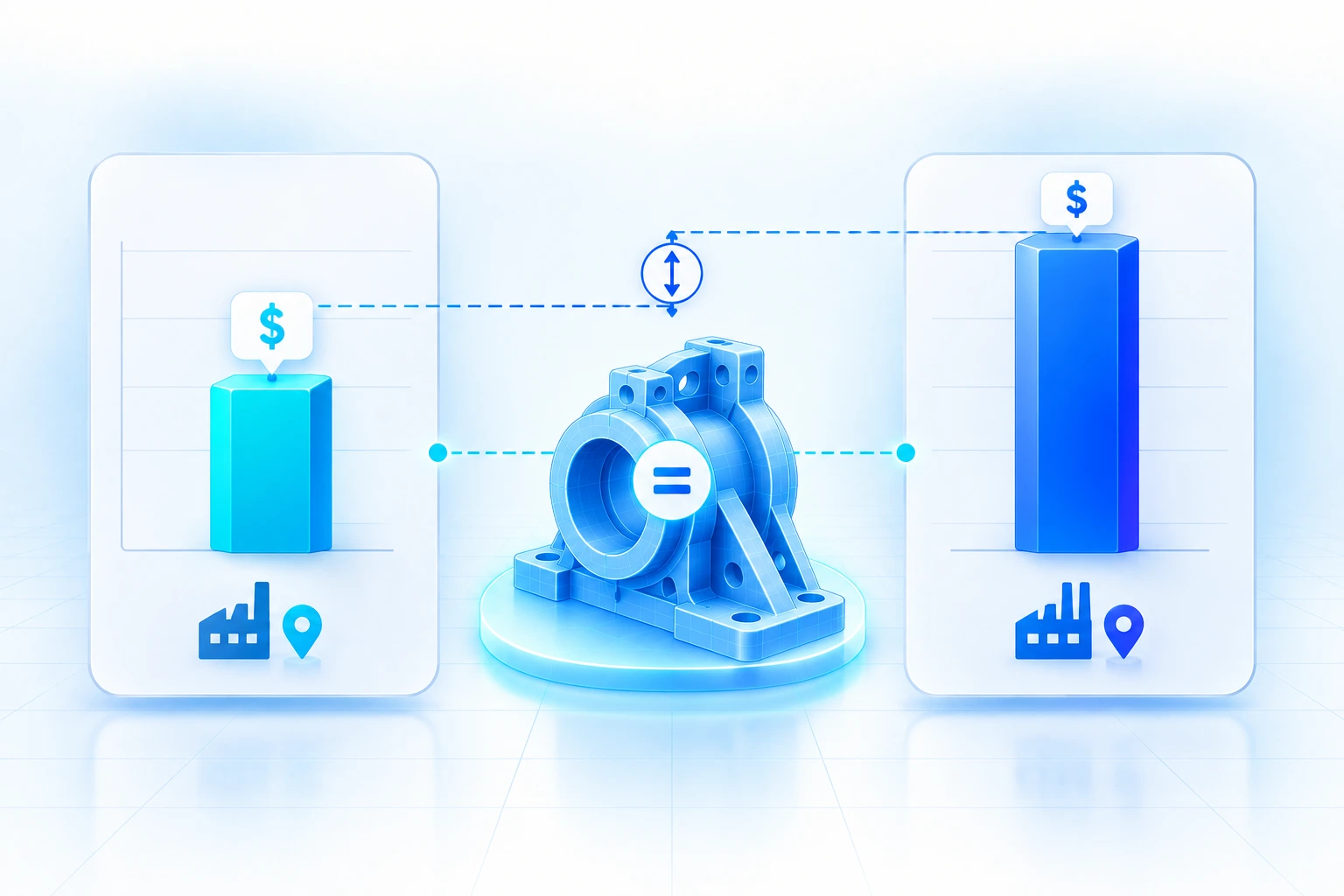
The same part, or a functionally similar one, can end up priced differently depending on which supplier or plant sourced it. This isn't necessarily the result of a mistake. It can happen gradually, as different sites make independent sourcing decisions over time, without a shared way to compare what each is actually paying for a similar part.
Duplicate and Near-Duplicate Parts
Multi-site manufacturers, particularly those that have grown through acquisition, can end up with parts that are functionally similar but carry different part numbers, different drawings, and different suppliers, simply because no one has directly compared them. Each may be sourced, priced, and managed independently, when consolidating to a shared part and supplier could reduce both cost and complexity.
Over-Specified Tolerances and Materials
Tolerance and material selection directly influence manufacturing cost, and in some cases they're specified tighter or higher-grade than the part functionally requires, sometimes inherited from an earlier design revision rather than a deliberate current decision. Identifying where tolerance or material could reasonably be relaxed without affecting function is a legitimate, engineering-grounded way to evaluate cost, not a shortcut around quality.
Supplier Concentration and Sole-Source Risk
Reading drawings at scale can also surface sourcing risk worth reviewing: categories or parts concentrated with a single supplier, sometimes without procurement having full visibility into how concentrated that dependency has become.
From Engineering Drawing Analysis to Procurement Intelligence
Extraction on its own answers a narrow question: what does this drawing say? Procurement intelligence is the layer built on top of that, turning structured drawing data into a clear path toward action.
In practice, that path tends to follow a consistent chain: drawing data is used to identify parts with similar geometry, material, and tolerance; those similar parts are compared against what's actually being paid for each; where a meaningful gap exists, a consolidation or resourcing opportunity is identified; and opportunities are then prioritized by potential dollar impact, so the ones most worth reviewing surface first instead of getting lost in the archive.
That causal chain, from drawing data to a prioritized opportunity, is what separates engineering drawing analysis from a general "AI reads documents" capability. It's what makes the output something a procurement leader can actually act on.
What to Look for in an Engineering Drawing AI Solution
A few questions apply regardless of which tool or vendor is being evaluated:
- Does it interpret engineering context, tolerance, material, geometry, or only recognize text?
- Can it process the drawing formats actually in use, native CAD exports, PDFs, scanned legacy drawings?
- Can it operate across a full drawing archive, not just a sample?
- Does the output get organized in a way that supports comparison and search, or does it remain unstructured?
- Does it work alongside existing ERP and PLM systems without requiring their replacement?
- How is extraction accuracy validated, and is sensitive engineering data handled securely?
How SourceOptima Helps Turn Drawing Data Into Procurement Intelligence
This is where a platform such as SourceOptima can help. It reads engineering drawings and purchase history a manufacturer already has, and turns them into a structured, classified view of parts, organized by the characteristics that influence cost and risk.
That structured view supports the kind of analysis outlined above: cost and sourcing opportunities ranked by potential dollar impact, design and engineering issues worth reviewing, and trade and tariff classification support, all drawn from the same underlying data. It's designed to work without requiring integration with an existing ERP or PLM system, and deployment is built around how manufacturers need to handle sensitive engineering data, with encryption, data isolation, and a full audit trail on every analysis.

Conclusion
Cost-saving opportunities inside engineering drawings often go unnoticed not because the information is missing, but because reading and comparing it across a real drawing archive isn't something a team can reasonably do by hand at scale. Engineering drawing AI closes that gap, turning drawings into structured, comparable data that can support real procurement and manufacturing decisions.
If your organization has a drawing archive that hasn't been analyzed this way, the most direct way to find out what it contains is to look at a sample of it. Bring a set of your own drawings to a 30-minute walkthrough with SourceOptima, with a first deliverable typically arriving within 30 days.