

PIXEAL
AI-Assisted Annotation Platform for Automotive and Robotics, the data engine powering ASPL annotation services
PIXEAL enables automated labeling, quality control, governance, and dataset delivery at scale for image, video, LiDAR, and multi-sensor data, purpose-built for two domains: automotive and robotics/physical AI.

What PIXEAL does
PIXEAL is ASPL's AI-assisted annotation platform, built for automotive and robotics teams that need to move fast on large-scale multi-sensor data programs. It combines a full-featured labeling workspace, 2D/3D annotation, sensor fusion, taxonomy management, and workforce tools, with an AI layer that drives auto-annotation, custom model integration, and object tracking across video and multi-frame sequences, plus human-in-the-loop annotation review. Built on Qt with AWS/MongoDB backend, PIXEAL handles camera, LiDAR, radar, and multi-sensor sequences at production scale, with versioned dataset delivery and built-in QA governance that auditors actually trust.
PIXEAL powers ASPL's annotation services, the same platform our in-house teams use to deliver production datasets, available to customers as a licensed platform or managed service, focused on two core applications: automotive, and robotics/physical AI.
The Problem It Solves
Scaling a data annotation program exposes the limits of general-purpose tools fast:
Manual annotation bottlenecks — without AI assist, labeling teams can't keep pace with high-volume sensor data programs without proportional headcount growth
Multi-sensor tooling gaps — camera, LiDAR, and radar data each demand specialized workflows; most platforms handle one well and bolt on the others
No integrated quality control — QA is typically a manual, bolt-on step with no audit trail, creating gaps in dataset governance
Privacy compliance overhead — anonymizing faces, plates, and signage before data can be shared or used for training adds costly, error-prone manual effort
Key Capabilities
Human-in-the-loop annotation, expert review and validation layered on top of AI auto-annotation, with full audit trails per batch
2D & 3D labeling — bounding boxes, polygons, polylines, and keypoints across camera images and point cloud data
Annotation taxonomy — object-level, frame-level, and sequence-level attributes with real-time search and auto-filter
Multi-sensor fusion — align point clouds in static coordinates, project 3D labels to 2D, cross-sensor object highlighting
Radar-aware annotation — event analysis for lane changes, cut-in/cut-out detection, and persistent tracking near road borders
Multi-view visualization — bird's eye, rear, side, and camera views with LiDAR intensity rendering and precision measurement tools
AI auto-annotation — 2D and 3D automated labeling, custom model integration, auto-tracking across frames, auto box resizing in 3D
Workforce & project management — task assignment, annotation metrics, per-annotator performance tracking, and QA workflows
Privacy anonymization — automated face, plate, and signage blurring for GDPR-compliant dataset delivery on cloud or on-premise
Annotation Features
- ▸ 2D / 3D labeling
- ▸ Taxonomy management
- ▸ Sensor fusion annotation
- ▸ Quality assurance workflows
- ▸ Data and labeling workflow management
- ▸ Project and workforce management
- ▸ Annotation metrics and performance tracking
AI-Powered Features
- ▸ 2D and 3D auto-annotation
- ▸ Custom model integration
- ▸ Custom model development for annotation use cases
- ▸ Auto-tracking of objects across frames, including video and multi-frame sequences.
- ▸ Auto box resizing in 3D annotation
Platform in action
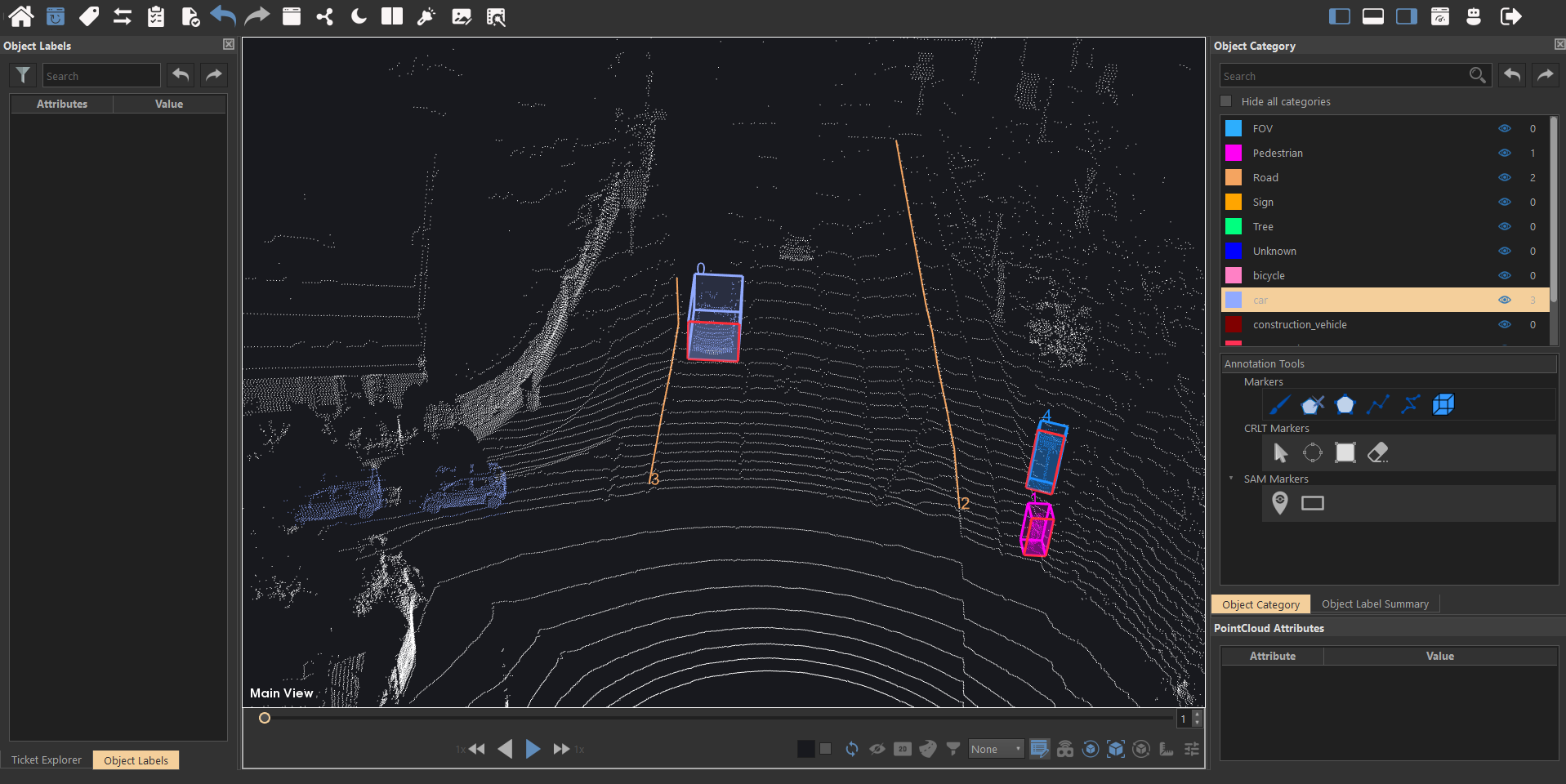
3D LiDAR point cloud annotation with multi-object bounding boxes
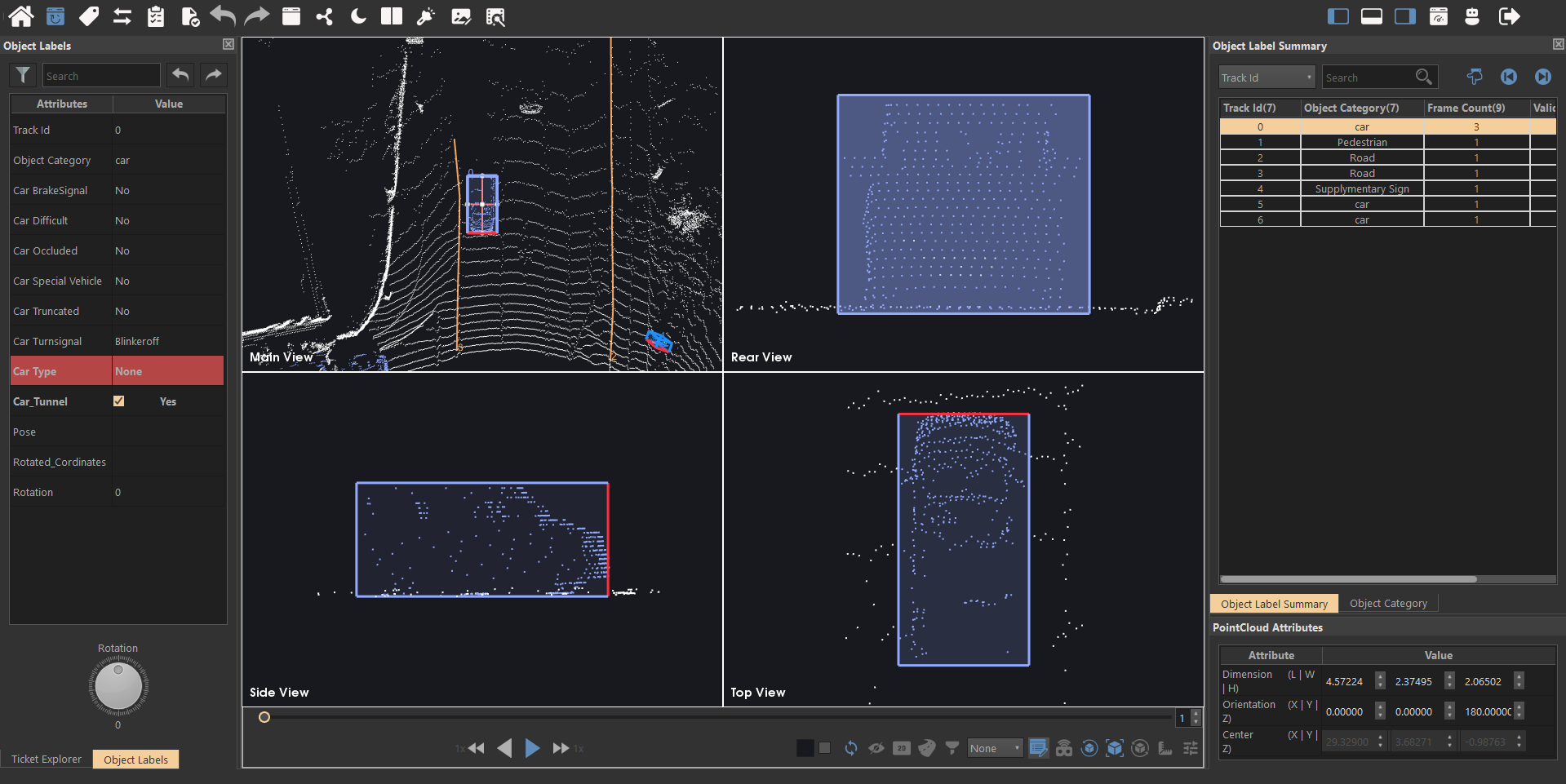
Multi-view workspace — main, rear, side, and top views simultaneously
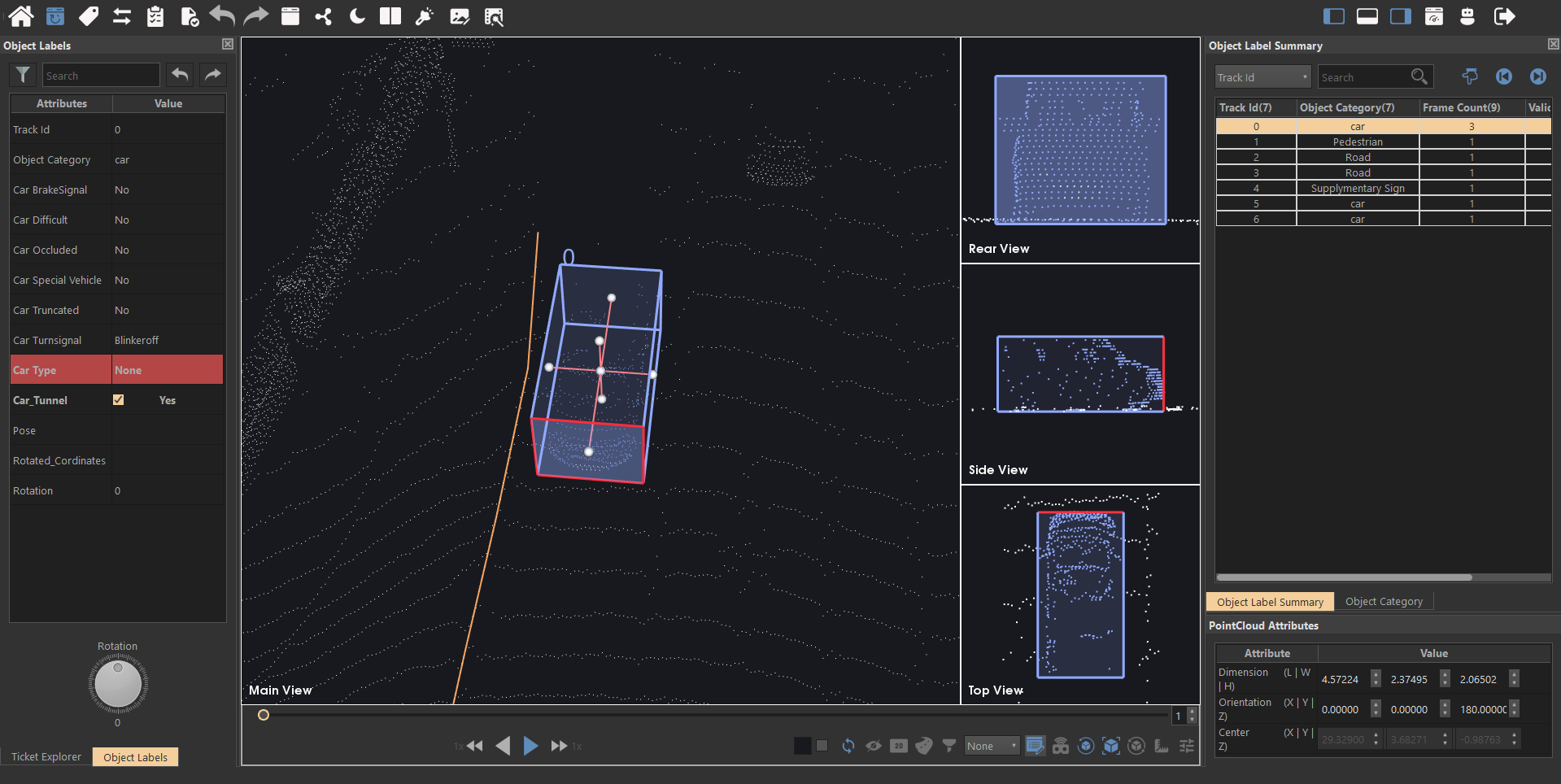
Radar-aware 3D scene annotation with cross-sensor highlighting
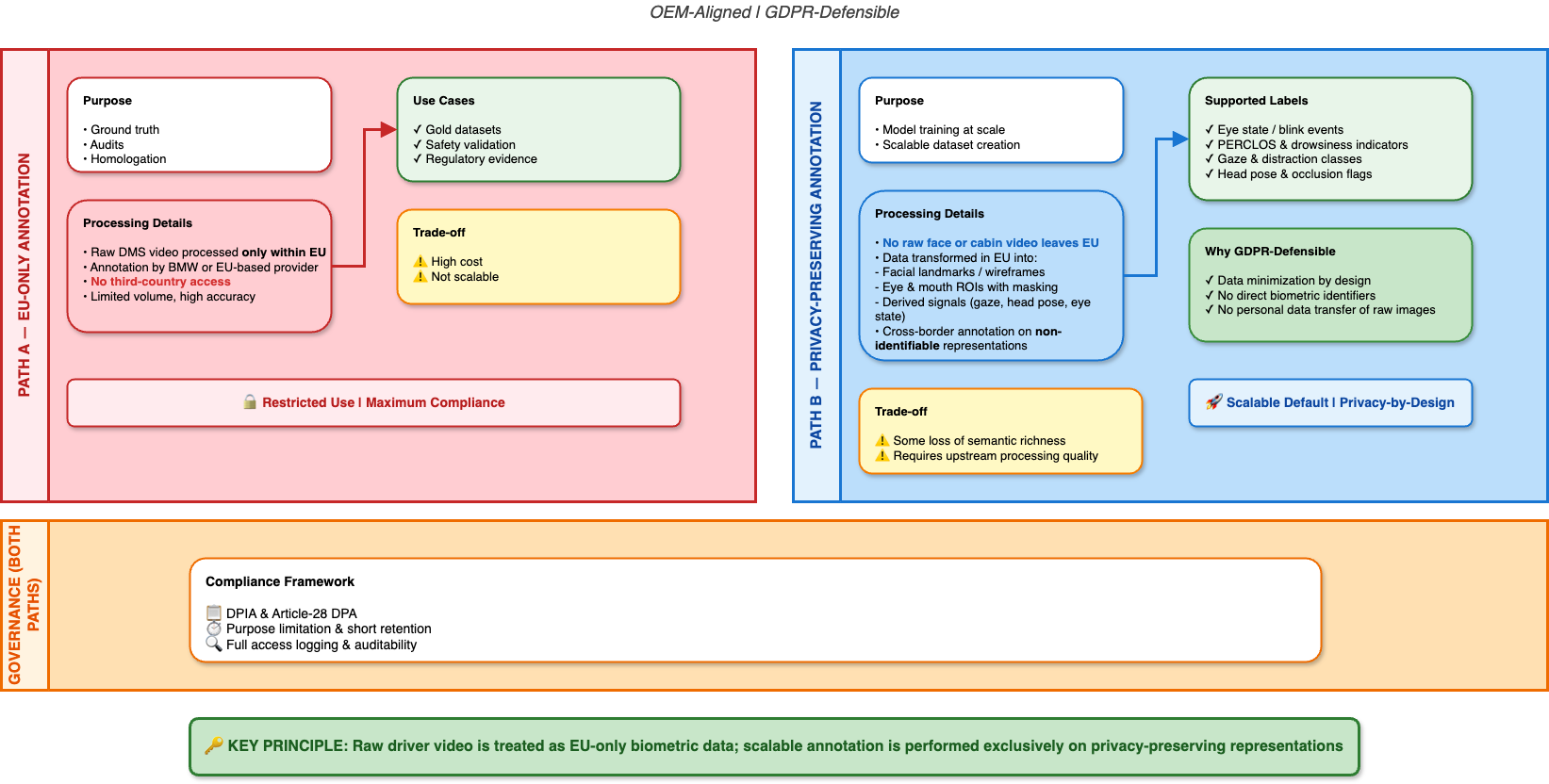
OEM-aligned, GDPR-compliant privacy anonymization pipeline
From data to decisions
From raw sensor data to verified, versioned datasets — PIXEAL manages every step of the annotation pipeline.
Ingest
Camera images, LiDAR point clouds (.h5), and radar data (.bsig) are ingested with ego-motion compensation pre-processing and loaded into project-specific configuration with version control.
Label
Annotators work inside PIXEAL's multi-view workspace with AI auto-annotation, taxonomy-driven attribute forms, and keyboard shortcuts. Custom models can accelerate domain-specific annotation tasks.
Review
Built-in QA workflows enforce predefined error categories, randomized frame-level sampling, and visual audit trails. Versioning automatically captures the label output at each workflow step.
Deliver
Validated datasets are exported in JSON with full label spec tracking and compliance documentation. Anonymized derivatives are produced on the same pipeline for GDPR-sensitive programs.
Built for every stakeholder
ADAS & AV Engineers
- ▸ Multi-sensor annotation (Camera + LiDAR + Radar) in a single platform
- ▸ Sensor fusion with 3D-to-2D label projection and cross-sensor highlighting
- ▸ ADAS event analysis — lane changes, cut-in/cut-out, radar-based tracking
- ▸ Dataset versioning and label spec control for model training pipelines
Data Operations Managers
- ▸ Project-level task assignment and workforce management
- ▸ Real-time annotation metrics and per-annotator performance tracking
- ▸ QA workflows with error categorization and audit trails
- ▸ CI/CD deployment — new platform features delivered within one sprint
AI / ML Teams
- ▸ Custom model integration for domain-specific auto-annotation
- ▸ Auto-tracking of objects across frames to reduce manual labeling time
- ▸ Structured dataset delivery in JSON with full provenance
- ▸ Support for validation datasets with built-in quality gates
Privacy & Compliance Officers
- ▸ Automated anonymization — faces, plates, signboards, and street names
- ▸ Trained on diverse global datasets (Asian, European, Indian, US environments)
- ▸ Cloud (AWS/Azure) or on-premise deployment for full data residency control
- ▸ Compliance audit trails per batch with miss-rate and false-positive checks
What you get
AI-assisted automation: auto-annotation and object tracking cut manual labeling cycles significantly
Integrated QC and governance: built-in quality gates, audit trails, and human-in-the-loop review, not bolt-on afterthoughts
Enterprise-ready dataset delivery: versioned, auditable, format-controlled output for automotive and robotics programs
Multi-sensor at scale: unified platform for camera, LiDAR, and radar without tooling fragmentation
Privacy-compliant by design: GDPR anonymization built into the same pipeline, not a separate process
Flexible deployment: cloud (AWS/Azure) or on-premise with the same accuracy guarantees